
Wet Yard or Weak Pressure? Water Line Repair in Buena Park
Who supplies your water, and where your responsibility starts
Water reaches Buena Park homes through the City of Buena Park Water Department, which draws on local groundwater and imported water. That puts the utility on one side of your meter and you on the other, and a leak or low pressure can sit on either.
The City publishes how its system works, but it does not publish where its responsibility ends and yours begins between the meter and the house. For that, phone the Water Department, (714) 562-3655, and ask who owns the line on each side of the meter. That one call can save a repair bill sent to the wrong party.
Water line repair in Buena Park covers the line you own: the pipe from the meter to the house, the shutoff valve and, in many homes, a pressure regulator. In-house pipe problems belong to the repiping page, and finding a leak before digging is covered under locating the leak first.
Your supplier is the City
The City of Buena Park Water Department supplies water from local groundwater and imported water, and answers questions about meters and the service line at (714) 562-3655.
Ask which section of line between the meter and the house is yours before you pay for a repair.
See the Water Quality Report 2024 published by the City.
Meter side or house side? A quick way to tell
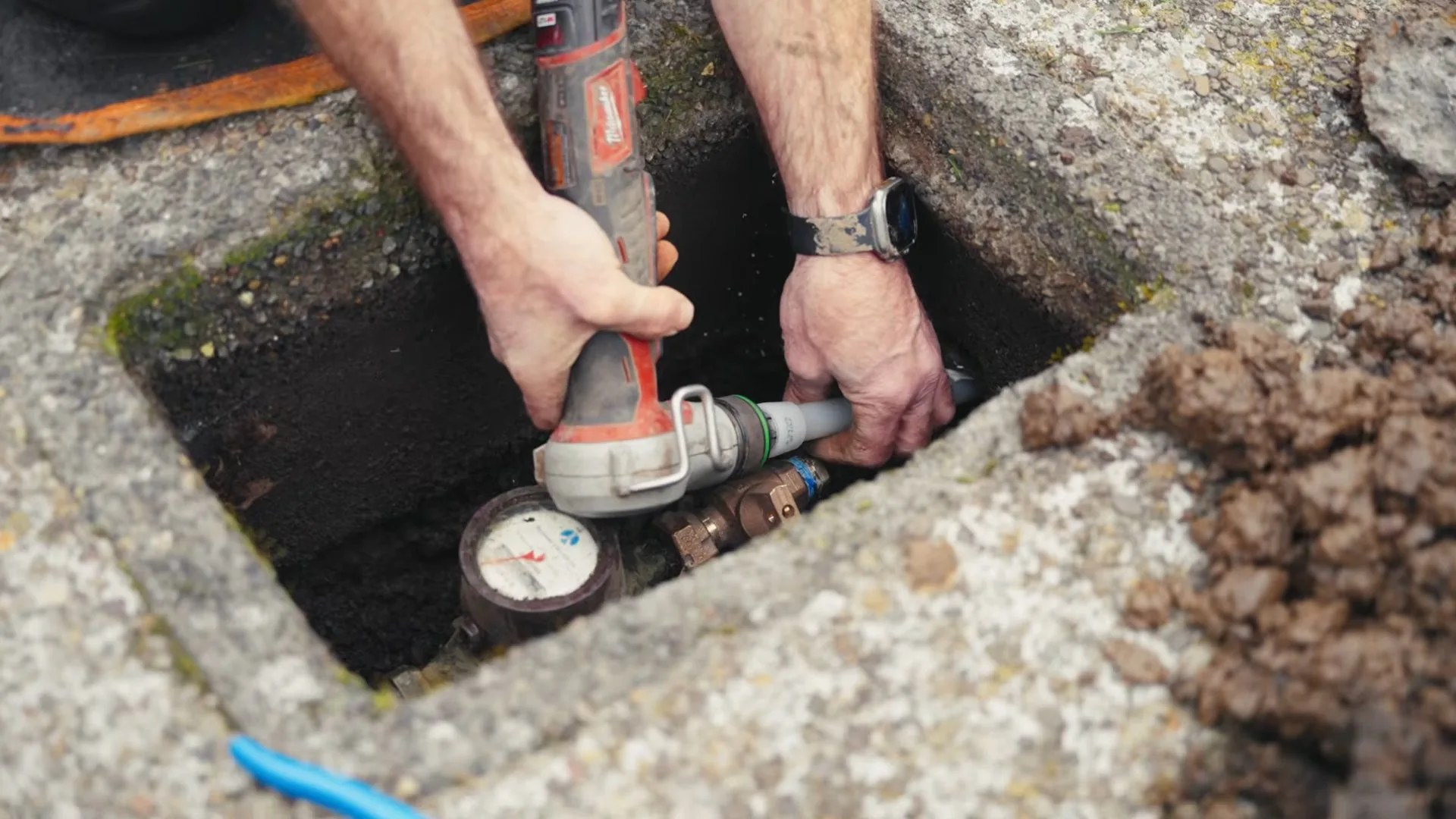
Water lines leak out of sight, so start with the meter. Turn off every fixture and appliance, then watch the meter dial or leak indicator. If it moves, water is leaving somewhere.
Next, close the main shutoff valve at the house. If the meter keeps moving with the house valve closed, the leak is between the meter and the valve, which is the part of the line you are likely responsible for. If the meter stops, the leak is inside the house or at the valve itself.
Yard service-line leaks show up outdoors first. Walk the yard. A soggy strip of lawn, a patch of bright green grass, a wet spot along the foundation or sound of hissing near the meter box are common clues. A buried water line leak can run for weeks before it surfaces.
- Meter moves with the house valve shut: the leak is on the line before the house.
- No water at the house, meter not moving: check that the main valve is open, then call.
- Wet strip of lawn or pavement: water is following the trench of the buried line.
- Hissing at the meter box: a fitting or the meter connection may be leaking.
Shut off the main and call. Digging near a buried line can break it further and may hit gas or electric lines, so call 811 before anyone digs.
Repair or replace? Trench or trenchless
A short leak in an otherwise sound line is often a spot repair. A line that has leaked more than once, or is corroded along its length, is a candidate for replacement.
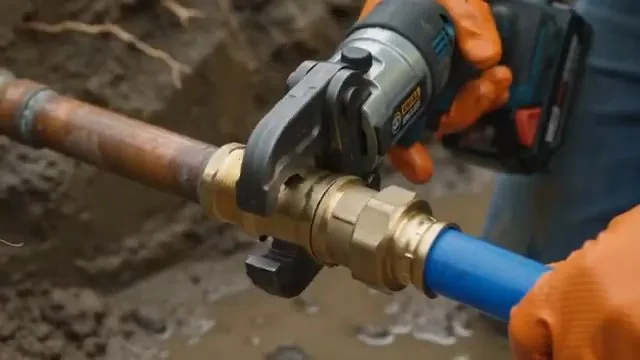
In an open trench, the plumber digs along the old line, removes it and lays new pipe. It gives full access, and it also means yard, driveway or landscaping work afterward.
Trenchless methods use small access holes at each end, and either pull new pipe through the old path or line it. They disturb less, but they need the old line to be reachable and in a condition that suits the method.
Water line replacement in Buena Park can also include a new shutoff valve and a pressure regulator. Ask your plumber why a method fits your lot, what restoration is included and what the manufacturer says about the pipe. If your older service line is of a material the City or plumber flags, ask the Water Department what it knows about the service line at your address.
| Option | Fits when | Ask about |
|---|---|---|
| Spot repair | One located leak in sound pipe | How the repaired section joins the old pipe |
| Open trench replacement | Pipe is corroded or has failed in several places | What gets dug up and who restores it |
| Trenchless replacement | The route is reachable and digging would harm hardscape | Access points and what the new pipe is made of |
| New shutoff or pressure regulator | High pressure or a failed valve at the house | The measured pressure before and after |
Digging safely: 811, permits and who applies
Before any digging, call 811 so underground utilities are marked. It is a standard step and a reliable plumber will ask about it. Hitting a buried gas or electric line is dangerous, and it makes every repair bigger.
Ask the plumber whether the work needs a permit and who applies for it. No City page states the rule for a water service repair, so a short call to the Building Division at (714) 562-3636 settles it. Replacing a line in the street right-of-way involves the City, and the plumber should know where that boundary sits.
Permitted work requires a licensed contractor, and the state board's site lists the class that covers water service piping. If you would like license details from dispatch, ask before the job is scheduled.
Low pressure, a pressure regulator or a high pressure problem?
Low pressure at every tap is a water line symptom, but it is not always a leak. Possible causes include a partly closed main valve, a failing pressure regulator, a clogged line or a problem on the City side. A single weak fixture is more likely a clogged aerator or a failing cartridge.
Ask the plumber to test pressure with a gauge at a hose bib and report the number. High pressure is a problem too: it strains pipes, fixtures and the water heater, and a regulator that has failed can let street pressure straight into the house.
Water meters belong to the City, so if the meter is leaking or damaged, call the Water Department. Plumbers can test lines and valves on your side of it. Hydro jetting, sometimes called high pressure hydro jetting, is for drain lines and not for supply lines, so a plumber who suggests it for a water supply line problem should explain why.
Water line questions people ask
How do I find an underground pipe leak?
Start with the meter test: with every fixture off, a moving dial means water is leaving. Close the main at the house and watch again to tell which side the leak is on.
Look for soggy ground and green patches. A plumber can use listening equipment to pinpoint a buried leak before anything is dug.
Can a plumber clean a yard drain?
Yes, yard and storm drains can be cleared with a cable or a jetting hose. That is separate from a water supply line, which carries clean water under pressure.
The clearing drains covers clearing drains. If a wet yard comes with a moving meter, the problem is more likely a water line.
I have no water at the house. How do I check the meter?
Check that the main valve at the house is fully open and ask a neighbor whether they are out too. If the whole street is dry, ring the City's Water Department on (714) 562-3655.
If only your home is out, read the meter. A moving dial with no water in the house points to a break on the line before the house.
What if the leak is in a buried water line I cannot see?
Shut off the main at the house and call a plumber. Do not dig to look for it. The plumber can use locating equipment to find the leak and tell you whether the line can be repaired or needs replacing.
Call 811 before any digging so buried gas and electric lines are marked.
Water line leaking or pressure off?
Tell dispatch what the meter does and what you see in the yard, and the plumber assigned can walk you through what to test first and what the options are.
Other pipe and leak topics
- Leak detectionLocating the leak before anyone digs
- RepipingPipe problems inside the house
- Slab leak repairWhen the water is surfacing under the house
- Water damage restorationCleanup after a line break
- Drain cleaningYard and house drain clogs
Looking elsewhere? Try the service directory or see the city list.