No Hot Water? Water Heater Repair in Buena Park
A leaking water heater can be patched, right? Not always
A common belief is that any water heater problem can be fixed with a part. Sometimes that is true. A bad thermostat, a worn heating element or a failed igniter are parts, and a plumber can replace them. A leak from the tank itself is different, and it is the one most homeowners hope can be repaired.
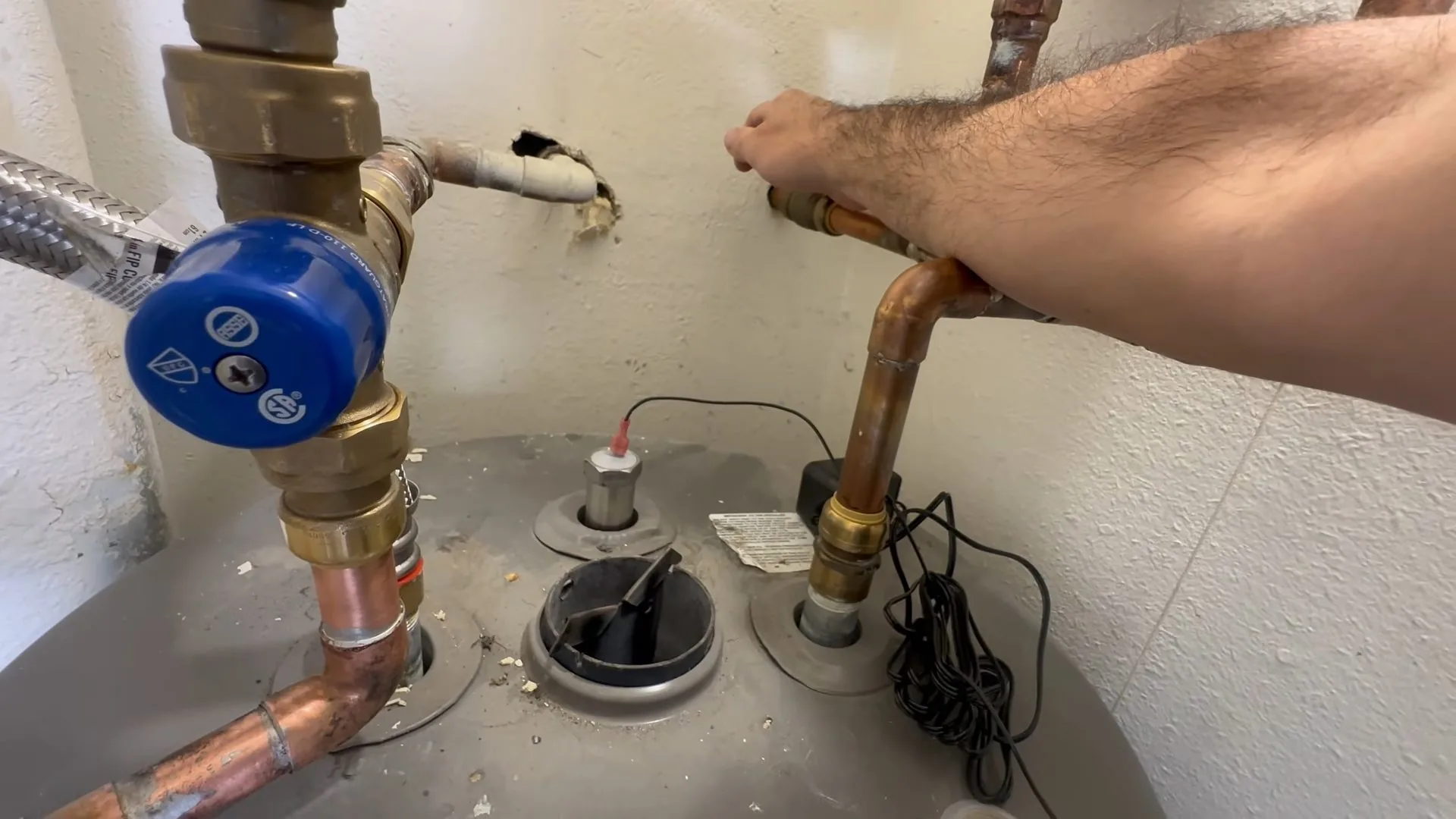
When the tank wall itself weeps, the steel inside has usually corroded through, and a patch will not hold. That is why water heater repair in Buena Park starts with finding where the water is coming from, not with a part order.
If the leak is at a valve or fitting on top of the tank, that can often be repaired. If it comes from the bottom or the tank wall, replacement is the likely answer, and the water heater replacement page covers it.
| Leak location | What it usually is | Repair or replace? |
|---|---|---|
| Tank body or bottom | Corroded tank | Replace the unit |
| Pipe connections on top | Loose or corroded fittings | Repair |
| Temperature and pressure relief valve | A worn valve or excess pressure | Repair or replace the valve, and check pressure |
| Drain valve at the bottom | A worn valve | Replace the valve |
| Water on the floor with no leak at the tank | Condensation or a nearby fixture | Find the actual source before any work |
Shut the cold supply valve on top of the tank and switch the heater off. For a gas unit, turn the gas control to off. For an electric unit, switch off its breaker. Then call.
No hot water: pilot, igniter, thermostat or element
No hot water, or only lukewarm water, narrows down quickly once you know the fuel. On a gas heater, the pilot light or electronic igniter may have gone out. A thermocouple that no longer senses the flame can keep shutting the gas off. On an electric heater, a tripped breaker, a failed upper or lower element or a bad thermostat are the usual causes.
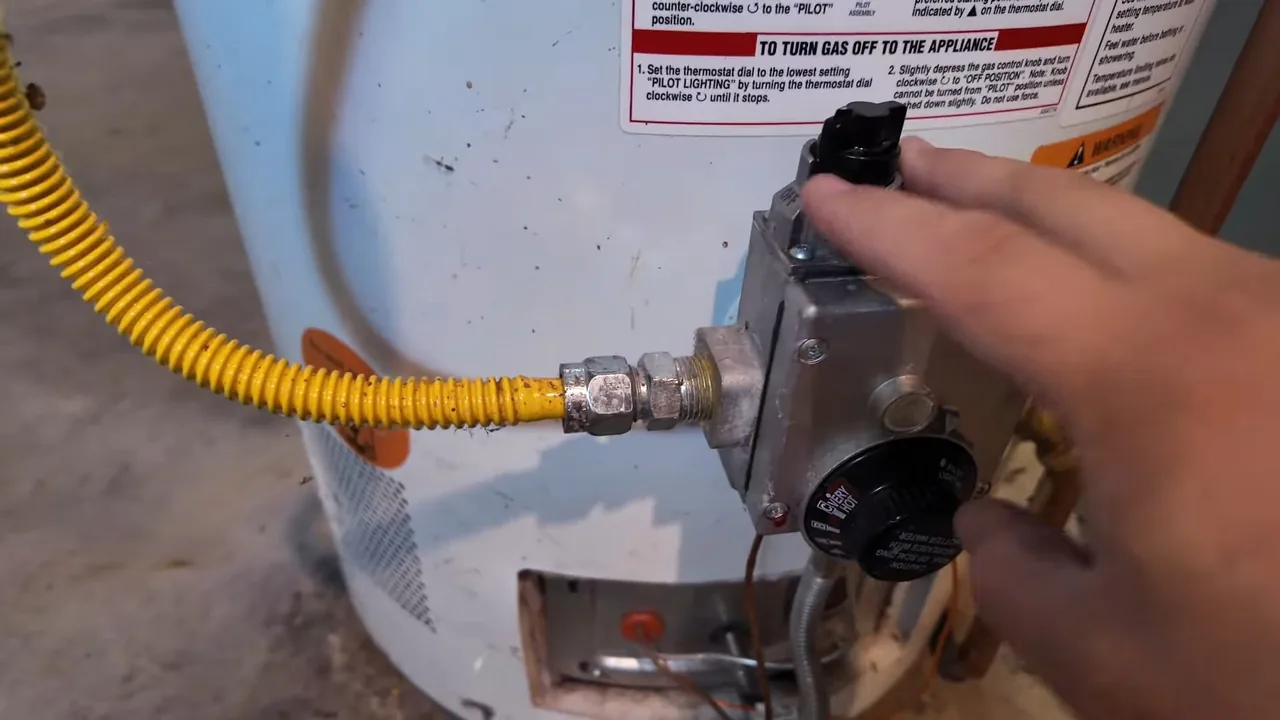
The first safe check is simple: look at the power or gas control and the breaker. If the pilot is out, the manufacturer's lighting instructions are printed on the heater. If you smell gas at any point, stop what you are doing, get everyone outside and phone SoCalGas at 1-800-427-2200. Call 911 if anyone is in danger, and do not flip switches or light a flame.
Heaters with tripped safety switches, a pilot that will not stay lit, or a burner that sounds rough are best left to a plumber. A gas appliance repair done wrong can be dangerous.
- Pilot out, no hot water: relight following the label, or call if it will not stay lit.
- Lukewarm water on an electric heater: one element may have failed.
- Hot water runs out fast: a failed lower element or heavy sediment in the tank.
- Burner flame yellow or flickering: a venting or combustion problem; call.
- Rotten egg smell: could be gas, so leave first and call SoCalGas.
Gas or electric? Why the fuel changes the repair
Gas and electric heaters fail in different ways, so the fuel decides which parts get checked. Gas units rely on a gas control valve, a pilot or igniter, a thermocouple and a vent that carries exhaust out of the house. Electric units rely on elements, thermostats and a high-limit switch.
If you are not sure which type you have, look at the label on the tank. A gas heater has a gas line and a vent pipe on top. An electric heater has a wiring box and no vent. Homes differ, so the label is the reliable answer.
Gas water heaters need proper venting, and a plumber should check the vent connection during any repair visit. A heater that backdrafts can send exhaust into the room. If you notice soot, a scorched look near the vent, or a headache when the heater runs, turn it off and call.
Flushing, sediment and hard water: why heaters fail early
Scale is the quiet cause of many heater failures. As water heats, minerals separate and settle in the bottom of the tank. The layer insulates the water from the burner or element, so the heater works harder, makes popping or rumbling noises, and wears out sooner.
Buena Park water is on the harder side. The City's 2024 water quality report puts average hardness near 12 grains per gallon in groundwater and 9.4 in imported water, and individual readings run as high as 18. Water at those levels leaves scale in tanks and on fixtures.
Ask your plumber about flushing the tank, which drains out loose sediment, and about a sediment-friendly maintenance schedule. A heater that is already heavily scaled may not flush well, and some flushes can release a leak that scale was sealing. If scale is a recurring issue, ask about treating hard water.
Hard water and tank life
The City reports average hardness of 204 mg/L (about 12 grains per gallon) for groundwater and 160 mg/L (about 9.4 grains per gallon) for imported water. The reported range runs from 44 to 306 mg/L.
Ask whether flushing or scale control fits your heater's age and condition.
Source: 2024 Water Quality Report, City of Buena Park Water Department; figures from 2023 sampling.
Repair or replace? What to ask the plumber
Everyday repair, such as a thermostat swap or a new element, is routine work for water heaters, and it is worth it when the tank is sound and the failed part costs little compared with a new heater.
Replacement makes more sense when the tank leaks, when repairs keep repeating, or when the heater is near the end of its life. Ask the plumber for the unit's age, which is printed on the label, and for what each option includes.
Ask whether the repair needs parts that must be ordered, whether a bracing check is part of the visit, and how venting will be handled for a gas unit.
State law requires water heaters to be braced, anchored or strapped, including replacements, so a plumber should check yours. If the work needs a permit, the Building Division at (714) 562-3636 can say. No City page states whether a water heater permit is required, so ask.
Contractor class matters here: the C-36 license class covers water heaters, gas piping and service piping. You can check a license on the California Contractors State License Board website, and you can ask dispatch for license details before work begins.
| Situation | Leans toward | Why |
|---|---|---|
| Failed igniter, thermostat or element on a sound tank | Repair | The tank is the costly part and it still holds |
| Leak from the tank body | Replace | Corrosion cannot be patched |
| Heater near the end of its life with repeated repairs | Replace | More repairs are likely to follow |
| Heavy scale and noise but no leak | Flush, then reassess | Some scale can be removed, some cannot |
| You want to switch fuel type or go tankless | Replace | See the tankless water heater page |
Leaking, gas smell or just lukewarm?
Call now if the tank is leaking, if there is any gas smell, or if the area around the heater is wet. Shut off the water and the heater, and leave the building at once if you smell gas.
You can schedule a visit if the water is lukewarm, if the heater is noisy but not leaking, or if the pilot goes out occasionally. A cold shower is unpleasant, but it is not an emergency.
Dispatch asks what type of heater you have, what you see and whether anything is leaking, then passes the call to a plumber working your part of town: one of our own plumbers or an independent from the network. Same-day visits depend on demand, and no arrival time is promised.
If the tank has already flooded a closet or garage, read about drying out after a tank failure.
Water heater questions people call about
Why is my water heater not making hot water?
On a gas heater, the pilot light or igniter may be out, or the thermocouple may have failed. On an electric heater, check the breaker first, then suspect a failed element or thermostat.
If you smell gas at any point, get outside and phone SoCalGas at 1-800-427-2200. For anything else, a plumber can test the parts and tell you whether the heater is worth repairing.
What does a noisy water heater mean?
Popping, rumbling or crackling usually means scale or sediment at the bottom of the tank, where water boiling under the layer makes noise. Hissing can mean a small leak at a fitting, and a loud bang can point to a pressure problem.
Noise alone is not an emergency, but if you hear it along with a leak or a burning smell, turn the heater off and call.
Can a plumber come the same day for a water heater problem?
Often a plumber can, but it depends on demand, parts and where the plumber is. A leaking tank or gas smell is treated as urgent, and the dispatcher routes those calls first.
Tell dispatch what you see, whether water is spreading, and what type of heater you have. Dispatch does not promise an arrival time.
What if my water heater is leaking and water keeps coming?
Shut the cold supply valve, turn off the gas or the breaker, and call. If water is spreading, shut off the main water valve too.
Leaks through the tank wall usually end in replacement. A leaking valve or fitting may be repairable. Dry the area quickly to protect flooring and walls.
Should I get a tall or a short water heater?
Tank height depends on the space. Tall tanks fit where there is vertical room, and low-profile ones fit under counters or in tight closets, often with less capacity. Check the closet or garage height, the vent path and the clearance the manufacturer requires.
Ask the plumber to measure and to confirm that capacity fits your household. Swapping the unit is covered under a full replacement.
Heater leaking, cold or not lighting?
Describe what you see and which fuel the heater uses. The plumber who takes the call can tell you whether it is a repair or a replacement before work starts.
Heater topics worth reading next
- Water heater replacementRepair versus replace, gas versus electric
- Tankless water heatersInstallation, flushing and descaling
- Water damage restorationFlooding from a failed tank
- Gas line repairGas leaks and appliance hookups
- Water softeners and filtrationHard water and scale at the source
Want a broader look? See the full services page or the cities served.