Slow or Clogged Drain? Drain Cleaning Service in Buena Park
One drain or the whole house? Start with which fixtures are slow
The call dispatchually starts the same way: a sink that drains slowly, a tub with standing water, or a toilet that gurgles when the washer runs. The first thing to work out is how many fixtures are affected.
If only one sink or one tub is slow, the clog is in that fixture's own branch line. If several fixtures back up together, especially the lowest ones in the house, the blockage is probably in the main line that carries everything out. A clogged drain in Buena Park can be either, and the answer changes the work.
Gurgling in a toilet when you run a sink, water backing up into a shower when the washer drains, or a slow drain in every bathroom are all signs of a main line problem. A kitchen sink that is slow while everything else works is almost always local to the kitchen branch.
- One fixture slow: branch clog, often hair, soap, food or grease.
- Two fixtures on the same wall slow: a shared branch line.
- Lowest drains back up first: the main line is restricted.
- Gurgling or bubbling in other fixtures: air is being pushed back through the system by a blockage.
- Sewage smell with slow drains: a main line problem, which the sewer line repair page covers when the cause is a damaged or root-filled pipe.
Avoid pouring drain chemicals into a standing-water clog and then calling a plumber. The water can burn skin and eyes during snaking. If you already used a chemical, tell the plumber.
Snaking, rooter service or hydro jetting? When each one fits
Plumbers use three main tools to clear a line. Which one fits depends on what is blocking it.
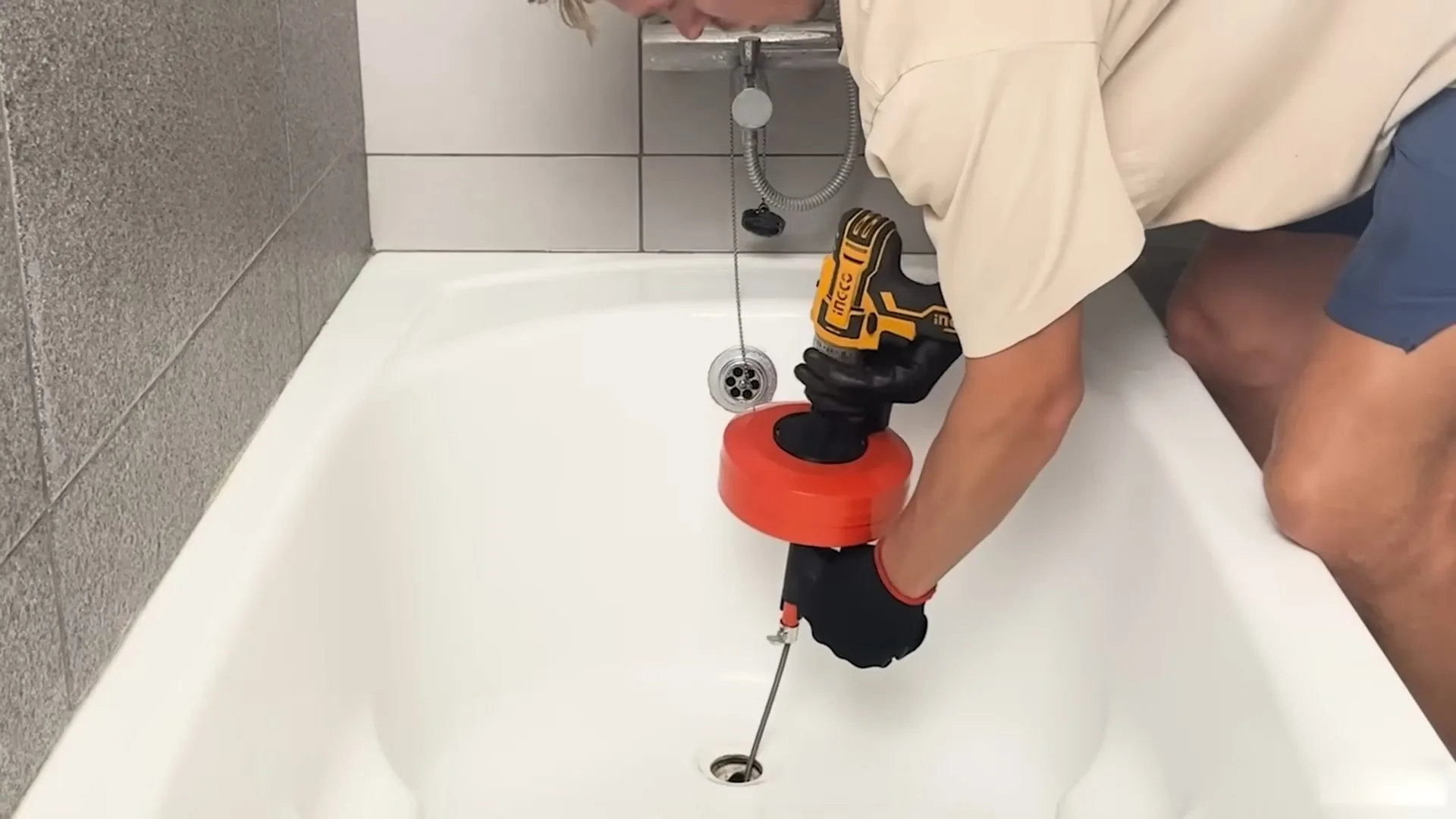
A drain snake or auger is a cable with a cutting or retrieving head. It bores through a clog or pulls it out, and it is the usual tool for a single sink, tub or shower.
Rooter service in Buena Park uses a larger cable machine on the main line and can cut through roots and heavy buildup. Hydro jetting, sometimes sold as hydrojet drain cleaning, sends high-pressure water through the line to scour grease, scale and silt off the pipe wall, and it can clear what a cable only punches through.
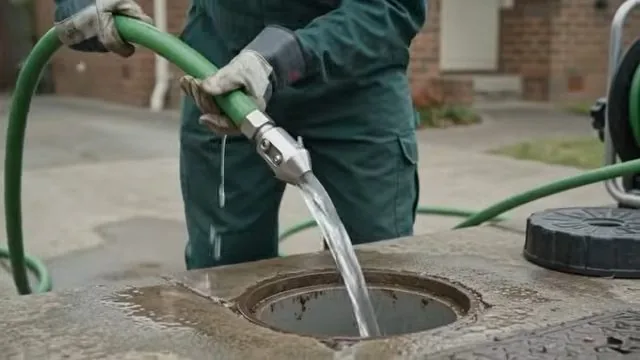
How does hydro jetting work? A jetting hose with a nozzle is fed into the line through a cleanout. Water pressure pushes the nozzle forward and sprays backward to clean the walls. A camera look first can show whether the pipe is sound enough for jetting, and a plumber should skip it if the pipe is cracked or collapsed.
| Method | Best for | Keep in mind |
|---|---|---|
| Hand auger or snake | Single sink, tub or shower clogs near the fixture | Pushes through a clog but may leave buildup on the walls |
| Rooter cable machine | Main line clogs and light root growth | Cutting heads can clear roots, but roots grow back |
| Hydro jetting | Grease, scale and silt in main and branch lines | Needs a sound pipe; a camera look first is wise |
| Camera inspection | Repeat clogs or an unknown cause | Shows the pipe but does not clear it by itself |
Kitchen sinks, main lines and yard drains
The kitchen sink is the most common drain call. Cooking fat cools and sticks to pipe walls, and food scraps and coffee grounds build on it. A kitchen drain clog often returns after a quick snaking if the grease layer stays on the pipe, which is why jetting is sometimes suggested for kitchen lines.
Mainline drain cleaning and snaking use a larger machine than a sink snake, and residential drain cleaning of a kitchen line now and then keeps buildup from returning, a form of drain cleaning and maintenance that suits older pipe. The main line is the pipe that carries all of the house's waste out toward the sewer connection.
A clog there affects every fixture. Tree roots, a belly in the pipe where waste settles, flushed wipes and heavy buildup are the usual causes. Many homes have a cleanout, a capped pipe near the house or the property line where a plumber can access the main without removing a toilet. Ask to see where yours is.
Yard and storm drainage is a separate matter. Surface drains and French drains handle runoff, not household waste. A plumber can clear a yard drain, but if the problem is a grading or soil issue, a landscape or drainage contractor may be the right call. Say what you have when you call so the right plumber is sent.
Commercial and restaurant drains are another scale. Grease traps, floor drains, kitchen exhaust drains and kitchen lines need regular service. See the commercial plumbing page if you manage a business.
Repeat clogs: what a camera inspection shows
A drain that clogs once is a nuisance. A drain that clogs every few months has a cause, and clearing it again does not remove the cause. Repeated clogs usually come from one of a few things: roots entering a joint, a sag in the pipe where waste collects, buildup that was never removed, or a damaged section that catches debris.
A drain camera is a small waterproof camera on a flexible cable. The plumber feeds it through a cleanout or a fixture opening and watches a monitor. A recording lets you see what the plumber sees, and it gives a record to compare later.
Ask for the recording, the location of the problem measured from the cleanout, and what type of damage it is. Cast iron, clay and older materials each fail in different ways, so ask what the camera found before approving a repair. The page on sewer line repair and replacement explains what comes next when a pipe is damaged.
For a damaged branch line inside the house, drain repair is a smaller job: a section cut out and replaced rather than a full replacement. Ask whether the repair needs access through a wall or floor and who restores the finish.
Whose pipe is it? The owner, the City and who to call
When a drain backs up, it matters whether the problem sits inside the house or on your own lateral or the City's. City code gives the owner two stretches of pipe: the connecting sewer from the main out to the right-of-way line at the street, plus the house sewer. The City keeps the sewer mains.
If the blockage is inside the house or on the lateral, a drain cleaning plumber can handle it. If a camera shows the problem is at or beyond the main, the City is the place to ask. Water service questions go to the City Water Department, (714) 562-3655.
Which side the clog is on
The owner carries the connecting sewer and the house sewer under city code, and the City carries its mains. A camera view of the line shows which side a blockage is on.
Ask the plumber to note where the clog or damage sits in relation to the property line.
Source: City code on sewers, posted on ecode360.
Many Buena Park homes were built in the middle of the last century, so drains and branch lines can be old. Housing data puts about 78.5 percent of units before 1980, though no City document lists the pipe material.
When a clog is urgent and when it can wait
Call right away if sewage is backing up into a tub, shower or floor drain, if several fixtures are clogged at once, or if toilets will not flush at all. Stop using water in the house, because every drop you add has nowhere to go. Keep children and pets away from standing sewage.
A single slow sink, a drain that gurgles now and then, or a faint odor can be scheduled. A drain odor that comes from a dry trap can sometimes be cured by running water for a minute. If drain odors persist despite cleaning, ask the plumber to check the vent and the line, since unclogging alone will not cure a vent problem.
Dispatch picks up at any hour. Say which fixtures are affected so the right equipment goes on the truck. The job may go to a plumber on our own team or to an independent from our network, and arrival times shift with demand.
After a backup, floors and baseboards can stay wet. See sewage cleanup and drying for what comes next.
Before you call: drain questions
Who do I call for a drain clog?
Call a plumber for a clog inside your home or on your own sewer connection. The City only handles its mains, so a clog in your house is not something the City will clear.
If you are not sure where the blockage is, call and describe which fixtures are slow. The dispatcher can route the call to a plumber who can clear it or tell you what is needed.
What is a clogged drain line, and how is it cleared?
A clogged drain line is a pipe that is partly or fully blocked by grease, hair, wipes, roots or debris. Plumbers clear it with a snake or cable, or with hydro jetting for heavy buildup.
If the line keeps clogging, a camera inspection finds the cause so that clearing is not repeated every few months.
What are the signs of a main line clog?
Several drains slow down at the same time, the lowest drains in the house back up first, and toilets gurgle when you run water elsewhere. Sewage in a tub or shower is the most serious sign.
Stop using water, and do not keep flushing. Call a plumber. Chemical cleaners rarely fix a main line clog and can make the work harder for the plumber.
How does hydro jetting work?
A jetting hose with a nozzle is fed into the line. High-pressure water pushes the hose forward and sprays backward, scouring grease, scale and silt off the pipe walls.
A camera look first helps. A cracked or collapsed pipe can be damaged by jetting, so the plumber should confirm the pipe is sound before using it.
What causes drain odors, and what can I do?
Common causes are a dry trap that lets sewer gas rise, buildup on the pipe wall, or a clog that holds waste in the line. Run water for a minute in sinks and tubs that are not used often.
If the smell stays, call a plumber. A persistent sewer smell can point to a vent or line problem that needs to be inspected.
Why does my kitchen sink keep clogging?
Cooking grease cools and sticks inside the pipe, and food scraps collect on it. A quick snaking opens a path but may leave the grease layer behind, so the clog returns.
Avoid pouring fat down the drain. If it keeps happening, ask about jetting or a camera look to see what is on the pipe wall.
Drain not draining?
Say which fixtures are slow and whether anything is backing up. The plumber who takes the call can explain the method and what the clog is likely to be.
Related drain and sewer help
- Sewer line repairRepeat main-line clogs, roots and collapse
- Commercial plumbingRestaurant and building drains
- Water damage restorationCleanup after a backup
- Toilet and faucet repairFixtures that clog or leak
- Garbage disposal repairDisposal jams that block the sink
Dealing with another problem? Visit the plumbing services hub or check which nearby cities get a plumber from this line.